Showing posts with label Windows Phone. Show all posts

Sunday, November 27, 2011

Microsoft says Windows Phones have had Siri-like functionality for over a year

Microsoft's Craig Mundie said that the iPhone's Siri voice recognition software is not new technology as a similar system has been available on the Windows Phone for over a year, and claims Apple marketed the capability to shift focus away from the iPhone 4S's lack of new features.
In an interview last week with Forbes, Microsoft Chief Research and Strategy Officer Craig Mundie said that Siri's capabilities are not Apple-specific, and notes that Windows Phone's similar "Tellme" technology has
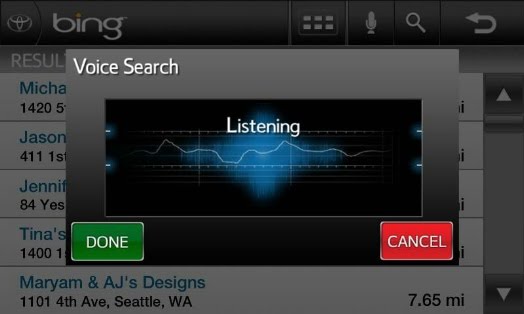
been functional for over a year.
"The Tellme facility's been in the Windows 7 phone for more than a year," Mundie said. "So I mean I just think people are infatuated with Apple announcing [Siri]."
Mundie goes on to say that Apple's marketing prowess is something that Microsoft could learn from, though he feels that the iPhone maker had to focus on the voice technology due to lack of new features on the iPhone 4S.
"In a sense, you know, many people were disappointed with [Apple's] newest phone because it wasn't a completely new thing, so the only thing they really had to hammer on was that feature," Mundie said. "Maybe we need to pick a feature and hammer on it harder."
The transition from Windows Mobile to the current Windows Phone platform has been difficult for Microsoft, said Mundie. The Redmond, Wash. tech giant had to overcome "errors" in moving from the old OS, which was targeted at enterprise users, to a new consumer driven model.
Mundie hopes that Windows Phone will become a major player in the mobile market, noting the recent partnership with Nokia is "huge" in making the the platform successful.Update, 5:10 p.m. PT:
In a blog post today, Stephen Baker, vice president of the NPD Group's Industry Analysis unit, reported preliminary results from NPD's Anatomy of Black Friday study. Among the findings:
    Almost 65 percent of tech shoppers actually ponied up for a product because they found it on sale, and 28 percent took advantage of big sales at a specific retailer they had targeted. Totals in both those categories were about 50 percent higher than the corresponding totals for shoppers overall, and both the tech totals reflected a 10 percent increase year over year.
    Electronics continued to be the second most popular category, after clothing, with more than 23 percent of Black Friday shoppers buying some type of electronic gadget--15 percent more than last year and 50 percent higher than the third most popular category, toys.
    TVs saw their popularity leap 30 percent from last year, and they overtook computers as the most popular electronics product (excluding purchases of video games from the computers category).
    Big-screen TVs seemed to be preferred to their smaller-screen brethren, with 26 percent of Black Friday tech shoppers saying they plan to spend more than $1,000 during the holidays. That's 10 percent more than last year and compares with 19 percent of overall shoppers who said they planned to spend that much.

Wednesday, May 25, 2011

Windows Phone Mango Update: Android and iPhone Challenger?

Will Microsoft’s upcoming software update for its Windows Phones, codenamed “Mango,” affect the company’s smartphone prospects? Certainly Mango represents a substantial revamp of Microsoft’s mobile platform, which is struggling for adoption in the face competition from Google Android and Apple’s iPhone. In contrast to those platforms, which offer grid-like screens of individual apps, Windows Phone consolidates Web content and applications into a set of subject-specific Hubs, including “Office” and “People.” As Microsoft executives demonstrated for a small group of media and analysts during a May 24 press event in New York City, the new features include a redesigned Xbox Live Hub, home-screen tiles capable of displaying up-to-the-minute information such as instant messages and social-networking data, the ability to consolidate friends and colleagues into groups, and visual voicemail.

All in all, Microsoft is planning to add some 500 new elements to Windows Phone. Mango will be released sometime this fall. That’s some distance away for a company wrestling to hold onto its market-share. Although research firm Gartner estimated that Windows Phone sold 1.6 million units in the first quarter of 2011, recent data from comScore suggests that Microsoft’s share of the overall smartphone market continues to erode—a situation probably not helped by some well-publicized snafus with the first two Windows Phone software updates. Even if the pre-Mango Windows Phone continues a slide in market-share, Microsoft has managed to secure some long-term commitments from its manufacturing partners. “We have some Windows Mango phones,” HTC CEO Peter Chou reportedly told Reuters May 25. “We are very committed to Windows phone products.” However, he offered no guidance on when those new devices might appear. Analysts generally view Microsoft’s deal with Nokia, which will see Windows Phone ported onto the latter’s smartphones, as a chance for the Windows Phone platform to gain some additional momentum—at least overseas, where Nokia continues to maintain a strong presence despite challenges from Android and iOS. In addition to HTC and Nokia, Samsung and LG Electronics have apparently committed to building new Windows Phone devices preloaded with Mango. Acer, Fujitsu and ZTE are also planning to produce Windows Phone devices for the first time. In other words, Windows Phone isn’t exactly in danger of dying within the next couple of months—especially since it represents an all-or-nothing bet by Microsoft in the increasingly important mobile space. The question is whether a Mango-enhanced Windows Phone can draw users who haven’t already gravitated towards Microsoft’s offering. Here the question becomes more problematic. Certainly a more robust smartphone platform helps spark increased adoption—for an example of that, look no further than Android, which has seen its market-share increase with each successive version. But all the new gizmos in the world won’t help a platform that people don’t inherently find attractive or useful in their daily lives. For enterprise users, Mango offers some key additions, including the ability to search a server for email items no longer stored to a device, and share and save Office documents via Office 365 and Windows SkyDrive. That could help drive Microsoft’s share among business users. For consumers, the revamped Xbox Live and features like multitasking could make Windows Phone a more enticing prospect. Mango also introduces unique applications like Local Scout, which offers a view of everything to see and do in a particular neighborhood, and an enhanced “People” Hub that includes Twitter feeds. Despite all those new features, Windows Phone has one weak spot: number of apps available for download. In contrast to Apple’s App Store and Google’s Android Marketplace, which respectively boast hundreds of thousands of apps, Windows Phone’s online storefront boasts only a few thousand. While Microsoft executives argue that the apps’ quality eclipses the need for quantity, the fact remains that smartphone platforms with thriving ecosystems—i.e., Apple and Google—have seen their market-share only increase, while those with comparatively few apps—Palm and Research In Motion come to mind—have seen their device adoption rates soften over several quarters. Microsoft continues to push developers to build apps for Windows Phone. And Mango will be a giant step forward in the company’s attempts to offer a smartphone platform on par with Android and the iPhone. The question is whether those app-developer efforts—and Mango’s new features—will give Microsoft the momentum it needs to take Windows Phone from an also-ran to a major contender.